Starting an exercise routine works best when it feels realistic, repeatable, and safe. For most people, a smart beginner fitness plan starts with three days of structured exercise per week, plus light daily movement such as walking, stretching, or easy mobility work. This gives your body enough practice to build momentum without overwhelming your muscles, joints, energy, or schedule.

How often should beginners work out each week?
Beginners should usually exercise 3 days a week to start, especially if they are new to strength training, cardio, or consistent physical activity. This beginners exercise frequency gives you enough stimulus to improve while leaving rest days for recovery. After a few weeks, many people can gradually move toward 4 or 5 active days per week, as long as intensity and soreness stay manageable.
The key is not to do as much as possible immediately. Fitness for beginners is about building consistency first. A simple beginner workout schedule that you can repeat for several weeks will do more for your health and confidence than an intense plan you abandon after ten days.
A good starting point looks like this:
3 workout days per week for strength, cardio, or a mix of both
2 to 4 light movement days for walking, stretching, yoga, or easy cycling
1 to 2 rest days where you let your body recover fully
Short sessions of 20 to 45 minutes, depending on your current fitness level
Gradual progress instead of sudden jumps in duration, weight, or intensity
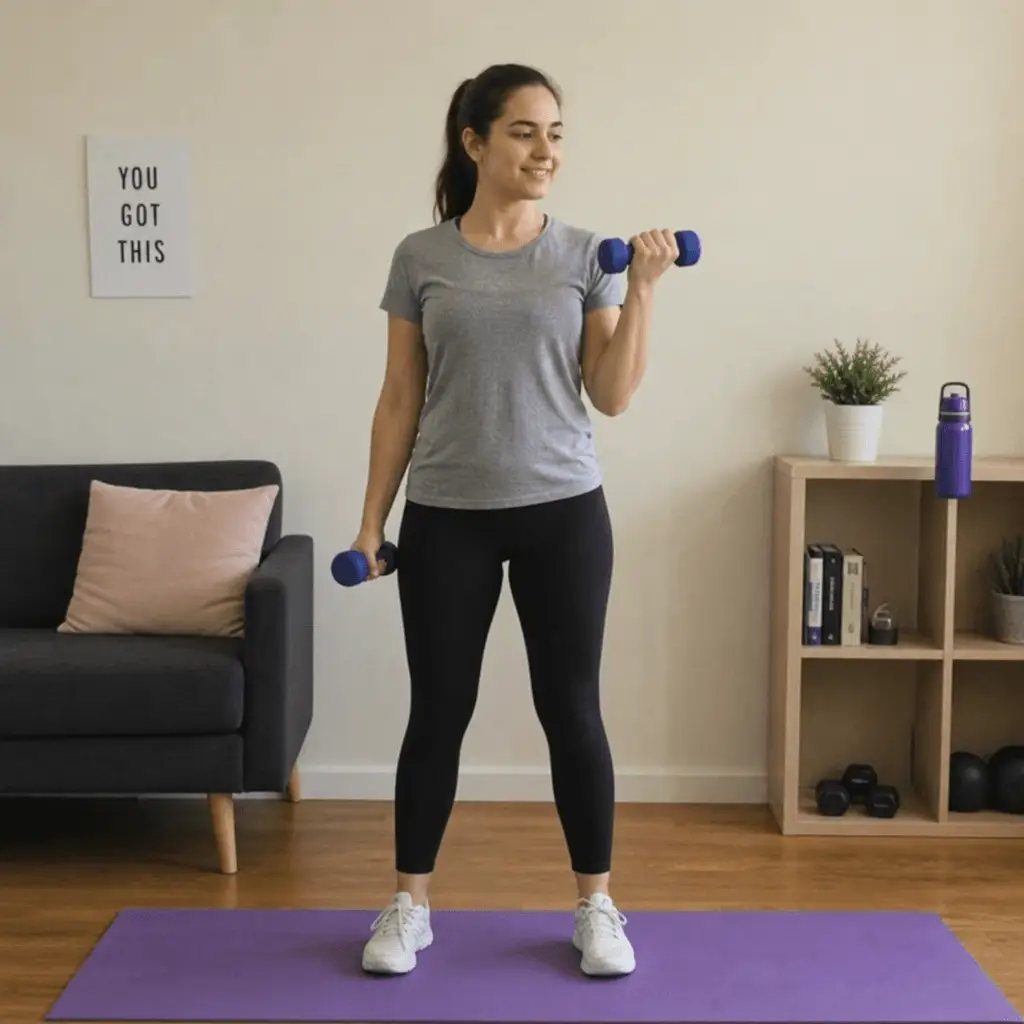
Why three days a week works so well
Three weekly workouts are effective because they create a rhythm your body can adapt to. You train, recover, and return with enough energy to practice again. That recovery time matters, especially when your muscles, tendons, lungs, and nervous system are still adjusting to regular exercise.
For beginners, doing too much too soon often leads to excessive soreness, fatigue, or frustration. You might feel motivated during the first week, but if every session leaves you drained, the routine becomes harder to maintain. A three-day plan helps you build strength, endurance, coordination, and confidence at the same time.
It also fits real life. Many people are balancing work, family, school, stress, and sleep. A beginner fitness plan should support your life, not compete with it. When workouts feel achievable, you are more likely to keep showing up.
A simple beginner workout schedule
Your beginner workout schedule does not need to be complicated. The goal is to train your whole body, include some cardio, and leave enough space between workouts to recover. You can exercise at home, in a gym, outdoors, or with basic equipment.
Here is a balanced weekly example:
Day | Activity | Focus |
|---|---|---|
Monday | Full-body workout | Strength and basic movement patterns |
Tuesday | Walk or mobility | Light recovery |
Wednesday | Cardio or circuit workout | Heart health and stamina |
Thursday | Rest or gentle stretching | Recovery |
Friday | Full-body workout | Strength and confidence |
Saturday | Easy walk, bike ride, or yoga | Enjoyable movement |
Sunday | Rest | Reset for the next week |
This schedule gives you three main exercise days and several lower-pressure opportunities to move. If three workouts feel like too much, begin with two. If three feels comfortable after a few weeks, add a fourth easy day before adding more intense training.
What should each beginner workout include?
Each beginner workout should include a warm-up, a few main exercises, and a cool-down. You do not need advanced movements or long sessions. You need repeatable basics that help your body learn how to move well.
A simple session might include:
Warm-up for 5 minutes Walk, march in place, do arm circles, or move through gentle bodyweight exercises. The goal is to raise your heart rate slightly and prepare your joints.
Train the major movement patterns Include a squat or sit-to-stand, a hinge such as a glute bridge, a push exercise, a pull exercise, and a core movement. These patterns support everyday strength.
Add easy cardio Walk briskly, cycle, use a treadmill, or do low-impact intervals. Start with a pace where you can still speak in short sentences.
Cool down for 3 to 5 minutes Slow your breathing, stretch gently, and notice how your body feels. This helps you finish calmly instead of stopping abruptly.
For example, a 30-minute beginner session could include bodyweight squats, wall push-ups, glute bridges, resistance-band rows, dead bugs, and a 10-minute walk. Keep the effort moderate. You should finish feeling challenged but not crushed.
Strength training, cardio, and rest all matter
Many beginners wonder whether they should focus on strength or cardio first. The best answer is usually both, but in manageable amounts. Strength training helps build muscle, joint support, posture, and everyday capability. Cardio supports heart and lung fitness, energy, and stamina.
You can combine them in the same week without overcomplicating your plan. Two full-body strength sessions and one cardio-focused session can work well. Another option is to do short strength circuits that also raise your heart rate.
Rest is the third piece people often ignore. Rest days are not wasted days. They are when your body repairs, adapts, and prepares for the next workout. If you feel unusually tired, sore, irritable, or unmotivated, your body may be asking for more recovery rather than more intensity.
Signs you are exercising the right amount
A good beginner routine should make you feel more capable over time. You may feel some muscle soreness, especially during the first couple of weeks, but it should not stop you from normal daily activities. Your energy, mood, balance, and confidence may begin to improve as consistency builds.
Use these signs to check your pace:
You can complete workouts with good form.
Soreness fades within a day or two.
You look forward to at least some sessions.
You can sleep and recover normally.
You feel challenged, not punished.
You are gradually improving reps, time, distance, or control.
On the other hand, you may be doing too much if you feel constantly exhausted, dread every workout, have sharp pain, or notice your performance getting worse. In that case, reduce intensity, shorten sessions, or take an extra rest day.
How do you progress after the first month?
After the first month, progress by changing one thing at a time: add a day, increase workout length, add a little resistance, or make cardio slightly longer. Avoid increasing everything at once. Small changes are easier to recover from and easier to maintain.
A practical progression might look like this:
Weeks 1 to 2: Exercise 2 to 3 days per week for 20 to 30 minutes.
Weeks 3 to 4: Build toward 3 consistent weekly workouts.
Weeks 5 to 8: Add more sets, slightly longer cardio, or one light activity day.
After 8 weeks: Consider 4 workout days if your schedule and recovery feel solid.
This approach keeps your beginner fitness plan flexible. Some people are ready to progress quickly, while others need more time at each stage. Both paths are valid. The best plan is the one your body can adapt to and your life can support.
Common beginner mistakes to avoid
Most beginner mistakes come from trying to rush results. Motivation is useful, but structure keeps you safe and consistent. If you avoid the most common traps, your routine becomes much easier to sustain.
Watch out for these habits:
Doing intense workouts every day: More exercise is not always better, especially at the start.
Skipping warm-ups: Cold muscles and stiff joints are less prepared for movement.
Changing workouts constantly: Variety is fun, but repetition helps you learn and improve.
Ignoring form: Good movement matters more than heavier weights or faster reps.
Comparing yourself to others: Your starting point, goals, and recovery are personal.
Quitting after missed days: Missing a workout is normal. Return at the next opportunity.
It is also wise to speak with a qualified health professional before starting if you have a medical condition, injury, chest pain, dizziness, or concerns about exercise safety.
FAQ
How many days a week should beginners exercise?
Most beginners should start with 3 days of planned exercise per week. This gives you enough practice to build fitness while allowing recovery between sessions. If you are very inactive, two days can be a better starting point.
Is working out 5 days a week too much for a beginner?
It can be too much if all five days are intense. However, 5 active days may be fine if only 2 or 3 are structured workouts and the others are light walks, stretching, or mobility sessions. Beginners should increase frequency gradually.
Should a beginner work out every day?
Beginners do not need hard workouts every day. Daily light movement can be helpful, but structured exercise should include rest and recovery. A mix of workout days, active recovery days, and rest days is usually more sustainable.
How long should beginner workouts be?
Beginner workouts can be 20 to 45 minutes. Shorter sessions are perfectly useful when they are consistent and well planned. Focus on quality movement, steady effort, and gradual progress.
What is the best beginner workout schedule?
The best beginner workout schedule is one you can repeat. A strong starting option is full-body exercise on Monday, Wednesday, and Friday, with walking or stretching on other days. Adjust the days to fit your life.
The best routine is the one you can repeat
So, how many days a week should beginners exercise? For most people, three planned workouts per week is the sweet spot. It is enough to build strength, improve stamina, and create a routine without making fitness feel like an all-or-nothing project.
Start simple, listen to your body, and progress slowly. Fitness for beginners is not about proving how hard you can push on day one. It is about becoming the kind of person who keeps moving, week after week.