If you are new to training, the good news is that beginner muscle building can start sooner than many people expect. Beginners often respond well because their bodies are learning new movement patterns, adapting to resistance, and improving strength at the same time. The real key is not chasing extreme workouts; it is following a simple beginner fitness plan that combines smart training, enough food, recovery, and consistency.
This beginner workout guide explains how fast progress can realistically happen, what strength training basics matter most, and how to create a beginner muscle building program that is safe, repeatable, and effective.

How quickly can beginners build muscle?
Beginners can often build muscle relatively quickly compared with more experienced lifters, but “quickly” should be understood as steady progress, not overnight transformation. In the first weeks, many people notice that exercises feel easier, weights become more manageable, and coordination improves. Visible muscle growth usually takes longer, but the early strength gains are still valuable because they help you train harder and more confidently over time.
So, can beginners build muscle quickly? Yes, beginners can make noticeable progress when they train consistently, use progressive overload, eat enough protein and calories, and allow their bodies to recover. The biggest mistake is expecting every change to show in the mirror immediately. Some of the earliest improvements happen in technique, balance, posture, and confidence before they show as obvious size.
A beginner should think in terms of months, not days. If you can complete a well-designed beginner muscle building workout schedule for several weeks without constantly skipping sessions, changing programs, or training through pain, you are already doing what many people fail to do. Muscle growth rewards repetition, patience, and small improvements stacked together.
The basics that make beginner muscle building work
The best muscle gain strategies are often simple. You do not need a complicated split, advanced supplements, or a gym full of machines to begin. You need exercises that train the major muscle groups, a plan that allows progress, and enough recovery between sessions.
Strength training for beginners works because muscles adapt to the demands placed on them. When you challenge a muscle with resistance, recover, and then gradually increase the challenge, your body has a reason to become stronger. Over time, that strength can support muscle growth, especially when your nutrition matches your training goal.
The core strength training basics
A strong beginner muscle building program should include these fundamentals:
Compound exercises: Movements such as squats, hip hinges, rows, presses, and lunges train multiple muscle groups at once.
Progressive overload: Gradually increase weight, repetitions, sets, or control so your body continues adapting.
Good form: Clean movement helps target the right muscles and reduces unnecessary strain.
Balanced training: Train your upper body, lower body, core, pushing muscles, and pulling muscles.
Recovery: Muscles need time, sleep, and nutrition to repair and grow.
Consistency: A realistic plan you can follow is better than a perfect plan you abandon.
These bodybuilding fundamentals apply whether you train at home, in a commercial gym, or with a coach. The details may change, but the principles stay the same.
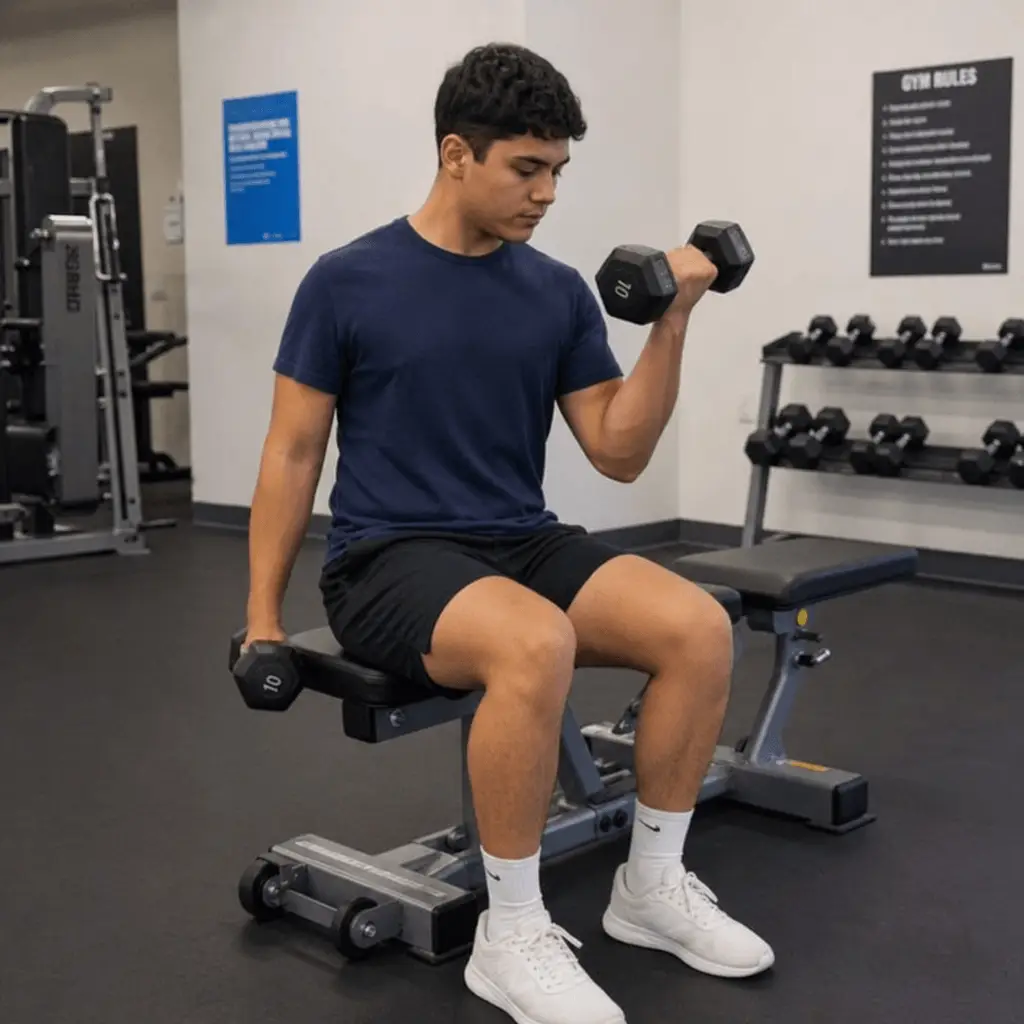
A beginner muscle building workout plan should be simple
A good beginner muscle building workout plan does not need to include six training days, dozens of exercises, or exhausting sessions that leave you sore for a week. In fact, most beginners do better with fewer exercises performed well. The goal is to learn the movements, build strength, and create a routine you can repeat.
For many beginners, three full-body workouts per week is a practical starting point. This gives you frequent practice with important movement patterns while leaving rest days between sessions. If you are brand new, two sessions per week can still work, especially if you are building the habit from scratch.
A sample beginner muscle building workout schedule
Here is a simple structure you can adapt to your equipment and ability level:
Day 1: Full Body Strength
Squat variation: 2–3 sets
Push-up or chest press: 2–3 sets
Row variation: 2–3 sets
Hip hinge or deadlift variation: 2–3 sets
Plank or core hold: 2–3 sets
Day 2: Rest, walking, or light mobility
Use this day to recover. Gentle movement can help you stay active without adding heavy fatigue.
Day 3: Full Body Strength
Lunge or split squat variation: 2–3 sets
Overhead press variation: 2–3 sets
Pulldown or assisted pull-up variation: 2–3 sets
Glute bridge or hip thrust: 2–3 sets
Carry, dead bug, or side plank: 2–3 sets
Day 4: Rest or easy cardio
Keep the effort moderate. You should finish feeling better, not drained.
Day 5: Full Body Strength
Leg press or squat variation: 2–3 sets
Incline press or push-up variation: 2–3 sets
Seated row or dumbbell row: 2–3 sets
Romanian deadlift or hamstring curl: 2–3 sets
Core rotation or anti-rotation exercise: 2–3 sets
Days 6–7: Recovery, mobility, recreation, or rest
This schedule is not the only way to train, but it is a useful starting point for a beginner muscle building workout. It gives your body repeated practice without overwhelming you. If you feel sore all the time, reduce the number of sets or choose easier variations. If the workouts feel too easy after a few weeks, gradually increase the challenge.
Weightlifting for beginners should focus on control before intensity
Weightlifting for beginners is not about proving how heavy you can lift on day one. It is about learning how to move well, finding the right level of challenge, and building confidence under resistance. A controlled repetition with moderate weight is usually more useful than a sloppy repetition with too much weight.
Start each exercise with a load you can control through the full range of motion. You should feel the target muscles working, but you should not feel sharp pain, joint discomfort, or a loss of control. For most exercises, stop the set while you still have a small amount of effort left in reserve. Training to total failure too often can create more fatigue than a beginner needs.
How to choose the right weight
Use this simple checklist during your workouts:
You can complete every repetition with steady form.
The last few repetitions feel challenging but not chaotic.
You are not holding your breath through the entire set.
You can feel the intended muscles working.
You can repeat the exercise next week without dreading it.
If all of those are true, the weight is probably appropriate. If the set feels effortless, add a small amount of resistance next time. If your form breaks down early, reduce the weight or use an easier variation.
This approach may feel slower at first, but it creates the foundation for long-term progress. The strongest lifters usually care deeply about basics: stable positions, controlled tempo, good bracing, and repeatable technique.
How should beginners eat to build muscle?
Beginners should eat enough total food to support training, prioritize protein at each meal, and choose mostly nutrient-dense foods that help energy, recovery, and consistency. A beginner muscle building diet does not need to be extreme, but it should match the goal. If you train hard while undereating, progress often slows because your body does not have enough resources to recover and grow.
Protein matters because it provides the building blocks your body uses to repair and build muscle tissue. Good options can include eggs, poultry, fish, lean meats, Greek yogurt, tofu, tempeh, beans, lentils, protein powders, and other foods that fit your preferences. Carbohydrates also help because they fuel training, especially for full-body workouts. Fats support overall health and help meals feel satisfying.
Practical nutrition habits for muscle growth
Instead of trying to follow a perfect diet, start with habits you can repeat:
Include a protein source in most meals.
Eat carbohydrates around training if they help your energy.
Choose fruits and vegetables for fiber, micronutrients, and meal volume.
Drink water throughout the day, especially around workouts.
Avoid skipping meals if your goal is to gain muscle.
Keep convenient options available so busy days do not derail your plan.
A beginner muscle building diet should also fit your lifestyle. If you dislike every meal, the plan will not last. Build a routine that supports training while still allowing flexibility. The best diet is not the strictest one; it is the one that helps you eat well consistently.
Muscle growth tips that matter more than motivation
Motivation is helpful, but it rises and falls. Systems are what keep a beginner fitness plan moving when life gets busy. The more you can remove friction from your routine, the easier it becomes to stay consistent.
One of the most useful muscle growth tips is to plan your workouts before the week begins. Decide when you will train, what exercises you will do, and what you need to bring. If you wait until you “feel ready,” workouts become optional. If they are already on your calendar, they become part of your routine.
Simple habits that support progress
Try using these habits for the first phase of your beginner muscle building program:
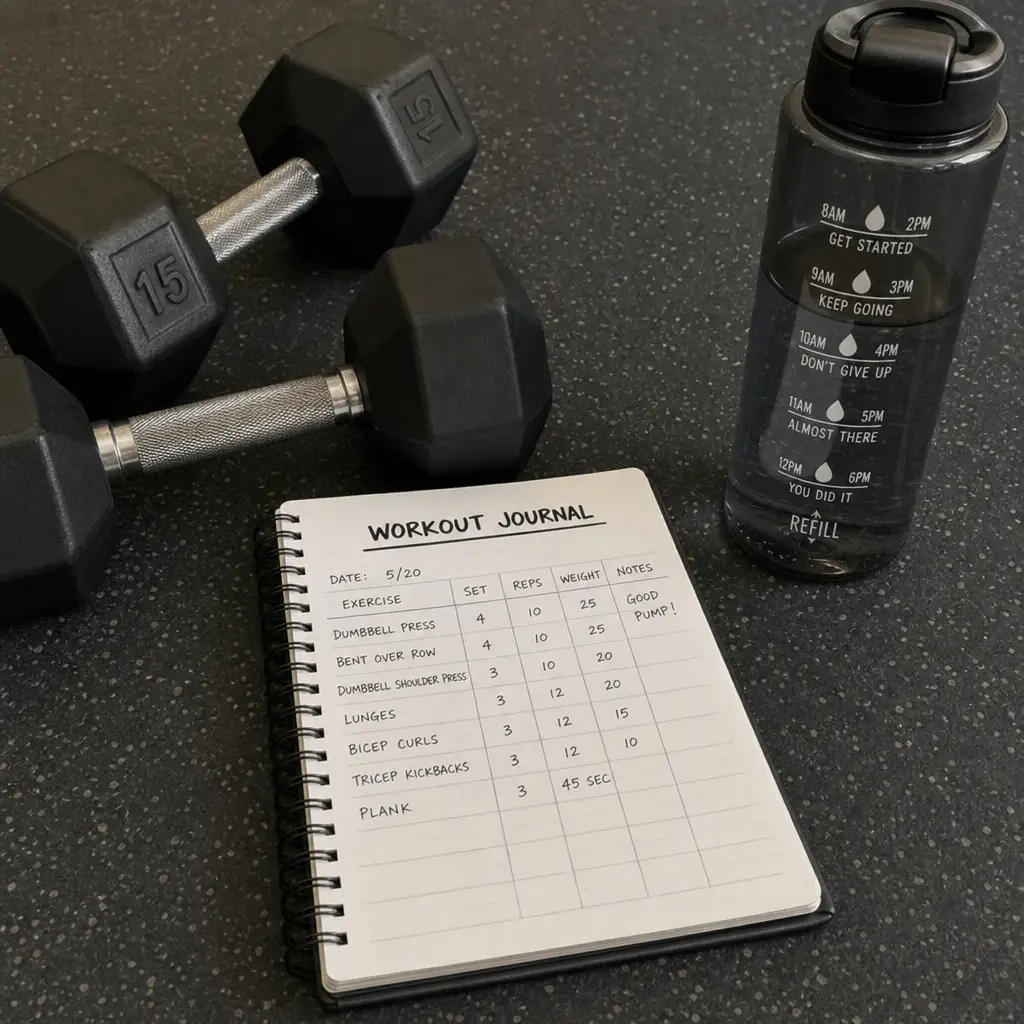
Keep a training log. Write down exercises, sets, repetitions, and weights so you can see progress clearly.
Repeat workouts long enough to improve. Changing exercises every session makes progress harder to measure.
Warm up with purpose. Use lighter sets and mobility drills that prepare you for the main lifts.
Sleep as consistently as possible. Recovery is not separate from training; it is part of the process.
Use small progressions. Add a little weight, one repetition, or one set when your body is ready.
Respect pain signals. Muscle effort is normal; sharp or worsening pain is not something to ignore.
These habits may seem basic, but they are powerful. A beginner who trains consistently, eats enough, and improves slowly will usually outperform someone who follows a dramatic routine for two weeks and then stops.
Common beginner mistakes slow progress
Most beginners do not fail because they lack effort. They struggle because they apply effort in ways that are hard to sustain. Avoiding a few common mistakes can make your training more productive and more enjoyable.
The first mistake is doing too much too soon. It is tempting to train every day when you feel excited, but sudden increases in volume can lead to excessive soreness, fatigue, and inconsistency. Start with a manageable amount of work and build from there.
The second mistake is program hopping. If you change your beginner muscle building workout every few days, you never give your body enough repeated practice to adapt. Variety has a place, but beginners benefit from repeating key exercises long enough to get stronger at them.
The third mistake is ignoring recovery. More work is not always better. Your muscles grow between workouts, not only during them. If sleep, food, and rest are constantly poor, your training results may suffer even if your workouts are intense.
A quick mistake-check
If your progress has stalled, ask yourself:
Am I training the same major movement patterns each week?
Am I gradually increasing the challenge over time?
Am I eating enough to support muscle gain?
Am I recovering between hard sessions?
Am I using good form instead of rushing through sets?
Am I giving the plan enough time to work?
These questions often reveal the problem. Usually, the solution is not a more advanced program. It is better execution of the fundamentals.
A beginner fitness plan should match real life
The best beginner fitness plan is not the one that looks most impressive online. It is the one you can follow through work, school, family obligations, travel, stress, and normal life. If your plan requires perfect conditions, it will break the moment your schedule changes.
Build your routine around your current capacity. If you can train three days per week, make those three days count. If you can only train twice, focus on full-body workouts and consistent progression. If you have short sessions, use fewer exercises and keep rest periods organized.
A realistic plan also includes flexibility. Missing one workout does not ruin your progress. The important move is returning to the plan quickly instead of turning one missed session into a missed month. Consistency is not perfection; it is the ability to keep going.
How do you know your program is working?
Your program is working if you are gradually getting stronger, recovering well, improving your exercise technique, and staying consistent without feeling constantly exhausted. Muscle growth can be hard to judge day by day, so beginners should track several signs of progress instead of relying only on the mirror.
Strength is one useful sign. If you can lift slightly more weight, complete more repetitions, or control the same weight better than before, your body is adapting. Workout quality is another sign. Movements that once felt awkward may start to feel smoother and more natural.
You can also track body measurements, progress photos, how clothes fit, and energy levels. These markers are not perfect, but together they provide a clearer picture. Avoid checking for dramatic change every morning. Look for trends over time.
When to consider coaching or extra support
Some beginners enjoy figuring things out independently. Others feel more confident with guidance, especially when learning form, building a beginner muscle building workout plan, or staying accountable. Coaching can be useful if you are unsure how to perform exercises, have a history of pain, or feel overwhelmed by conflicting advice.
A coach or trainer can help simplify the process. Instead of guessing which exercises to choose, how much to lift, or when to progress, you can follow a plan built around your goals and current ability. This does not mean you need support forever. Many beginners use coaching to build a strong foundation, then continue with more confidence on their own.
Take the next step
If you want help turning these strength training basics into a plan that fits your body, schedule, and goals, take the next step today. Contact Us to learn more and get support with a practical beginner muscle building program.
A clear plan can remove guesswork and help you train with more confidence. Whether you are starting from zero or returning after time away, the right guidance can make your first phase of training safer, simpler, and easier to stick with.
Frequently asked questions
Can beginners gain muscle and lose fat at the same time?
Yes, some beginners can gain muscle while losing fat, especially if they are new to strength training, returning after a break, or improving their nutrition. This is often called body recomposition. It works best when training is consistent, protein intake is solid, and calorie intake is not extremely low. However, the process can be slower than focusing on one goal at a time.
How many days a week should a beginner lift weights?
Many beginners do well with two to four strength sessions per week. Three full-body sessions is a common sweet spot because it provides enough practice without excessive fatigue. The right number depends on your recovery, schedule, training history, and workout intensity. Start with a frequency you can maintain, then adjust as your capacity improves.
What is the best beginner muscle building workout?
The best beginner muscle building workout trains the whole body, uses simple exercises, and allows steady progression. A balanced session might include a squat or lunge, a hip hinge, a push, a pull, and a core exercise. The exact exercises can change based on equipment and ability, but the goal is the same: train major muscle groups with good form and repeat the plan consistently.
Do beginners need supplements to build muscle?
Supplements are not required for beginner muscle building. Food, training, sleep, and consistency matter far more. Protein powder can be convenient if you struggle to get enough protein from meals, but it is not magic. Before spending money on supplements, make sure your workouts, nutrition habits, and recovery are already in place.
How long should a beginner workout last?
A beginner workout can often be effective in about 45 to 60 minutes, though shorter sessions can still work if they are focused. The session should include a warm-up, a few main strength exercises, and enough rest to perform quality sets. Longer is not automatically better. A clear, repeatable session usually beats a long workout filled with random exercises.
Should beginners train to failure?
Beginners usually do not need to train to complete failure often. Stopping with a little effort left in reserve helps maintain form and reduces unnecessary fatigue. As technique improves, occasional harder sets may be appropriate, but failure should not be the foundation of a beginner workout guide. Controlled, repeatable effort is more useful in the early stages.
What should beginners eat after a workout?
A post-workout meal should include protein and, for many people, carbohydrates. Examples include Greek yogurt with fruit, eggs and toast, tofu with rice, chicken with potatoes, or a smoothie with protein and fruit. The exact meal is less important than your total daily intake. If your overall beginner muscle building diet is consistent, one meal will not make or break your progress.
The main takeaway
Beginners can build muscle quickly compared with later stages of training, but the fastest sustainable results come from mastering the basics. Follow a simple plan, train the major muscle groups, progress gradually, eat enough to recover, and give your body time to adapt.
You do not need perfection to start. You need a beginner muscle building workout schedule you can repeat, a few reliable muscle building tips you actually use, and the patience to keep showing up. Build the habit first, and the results will follow.