Standing in front of a gym full of equipment with zero idea where to begin is one of the most common (and most paralyzing) feelings in fitness.
You’re not alone. Most people who want to start working out never actually start — not because they lack motivation, but because they don’t know where to begin, what to do, or how to avoid wasting their first few months on the wrong routine.
The good news: starting doesn’t have to be complicated. You don’t need a perfect plan, a fancy gym membership, or six hours a week. You need a simple starting point and a little structure.
This guide breaks down exactly how to start working out for the first time — step by step, without the overwhelm.
Want a plan built specifically for you instead of figuring it out alone? Grab a free beginner training plan here and skip the guesswork.

Step 1: Get Clear on Your "Why"
Before you touch a single dumbbell, get specific about your goal. “Get in shape” is too vague to build a plan around.
Ask yourself:
- Do I want to lose fat, build muscle, or just feel stronger and healthier?
- How much time can I realistically commit each week?
- Am I dealing with any injuries or physical limitations I need to work around?
A clear goal shapes everything that comes next — your exercise selection, your schedule, and how you measure progress.
Step 2: Start With Full-Body Basics, Not a Bodybuilder Split
One of the biggest beginner mistakes is jumping straight into a 5-day “bro split” copied from someone with years of experience.
When you’re just starting out, 2-3 full-body sessions per week is plenty. This builds a foundation of strength and movement quality before you specialize.
A simple beginner structure might include:
- A push movement (chest/shoulders)
- A pull movement (back)
- A lower-body movement (legs)
- Core work
As you build consistency, you can layer in more targeted bodybuilding principles or explore a structured strength approach like 5/3/1 training, which is a well-known method for building strength progressively over time. That said, these are typically better suited for once you’ve built a few months of consistent training under your belt.
Step 3: Learn a Handful of Core Movements — Not 50 Exercises
Start simple with basic arm and shoulder movements before adding volume or complexity:
- A basic arm workout routine covering biceps and triceps
- A beginner-friendly bicep curl to build confidence with dumbbells
- A simple biceps workout using dumbbells once you’re ready to add variety
- A foundational triceps workout to balance out your pushing strength
- An accessible shoulder routine to build stability and strength safely
For Your Core
Core training is often misunderstood by beginners — it’s not just about “getting abs,” it’s about building the stability your whole body relies on.
- Beginner-friendly abs exercises you can do at home, no equipment required
- A structured set of abs workouts to build real core strength over time
You don’t need to do all of these in one session. Pick 1-2 from each category and rotate them as you build consistency.
Step 4: Understand That Fat Loss Isn't Just "More Ab Exercises"
This is one of the most common beginner myths: doing endless crunches to lose belly fat.
Fat loss happens through a combination of consistent training, a sustainable nutrition approach, and overall calorie balance — not spot-targeting one area of your body.
If losing stomach fat is your goal, it’s worth understanding the real approach behind a stomach fat loss workout, which combines full-body strength training with the right training volume and intensity — not just isolated ab work.
Step 5: Track Progress the Right Way
Beginners often quit not because they aren’t making progress, but because they’re not measuring the right things.
Instead of obsessing over the scale daily, track:
- How your clothes fit
- Strength gains (are you lifting more than last month?)
- Energy levels and sleep quality
- Consistency (are you actually showing up?)
Progress in the first few months is rarely linear — and that’s completely normal.
Step 6: Build Consistency Before You Chase Intensity
The beginners who see the best results aren’t the ones who train the hardest in week one. They’re the ones who show up consistently for months.
A simple 3-day-a-week routine you actually stick to will always outperform an intense 6-day plan you quit after two weeks.
Give yourself permission to start small. Consistency compounds — intensity without consistency doesn’t.
Common First-Timer Mistakes to Avoid
- Copying an advanced program meant for someone years ahead of you
- Skipping warm-ups and jumping straight into heavy weight
- Doing too much, too soon and burning out by week three
- Ignoring form in favor of lifting heavier
- Comparing your week 1 to someone else’s year 3
Avoiding these alone will put you ahead of most people who try to start on their own.
You Don't Have to Figure This Out Alone
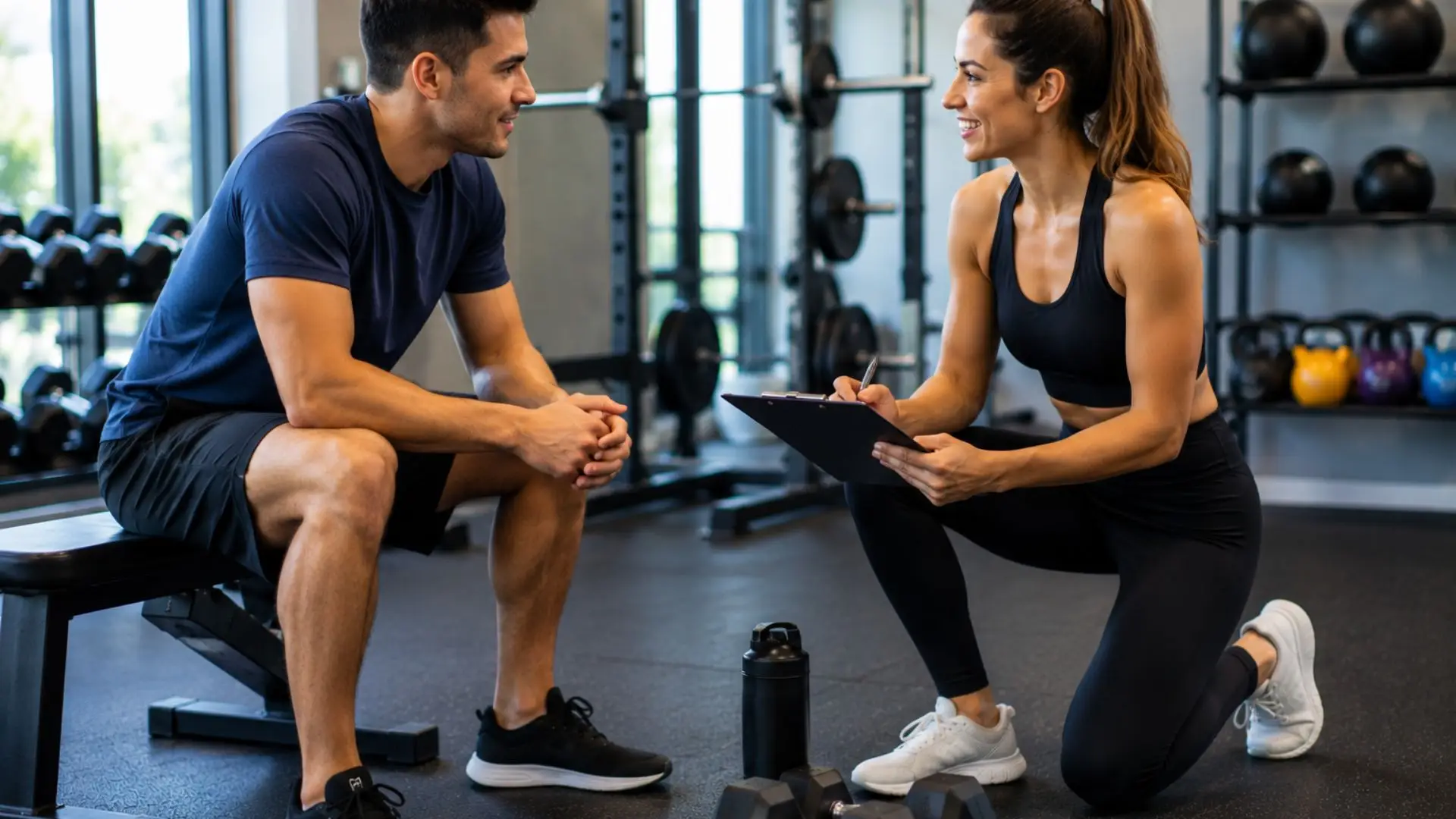
Starting a fitness routine for the first time doesn’t need to be complicated — but it does help to have a clear plan and a little guidance so you’re not second-guessing every decision.
The fastest way to build lasting results is to start with structure, not guesswork.
Ready to Start the Right Way?
Skip the trial and error. Get a free beginner training plan here and start your first workout with a clear, guided plan built for people just like you.