You just finished a tough session — maybe a heavy chest workout, a hard cardio session, or a full-body strength circuit. Now you’re standing in your kitchen wondering: does it actually matter what I eat right now, or am I overthinking it?
Short answer: yes, it matters — but probably not in the way you think.
Post-workout nutrition doesn’t need to be complicated, timed to the minute, or built around expensive supplements. But it does play a real role in how well you recover, how quickly you build strength, and whether your training actually translates into results.
This guide breaks down exactly what to eat after a workout, why it matters, and how to keep it simple.
Want a nutrition and training plan that actually fits your goals? Grab a free plan here and stop guessing.
Why Post-Workout Nutrition Actually Matters
When you train — whether it’s strength training or cardio — you’re creating small amounts of muscle breakdown and depleting your energy stores (glycogen).
What you eat afterward helps your body do two critical things:
- Repair muscle tissue that was broken down during training
- Replenish energy stores so you’re not running on empty for your next session
Skip this step consistently, and you may notice slower recovery, more soreness, and progress that stalls despite putting in the work.
The Two Nutrients That Matter Most After Training
You don’t need a complicated meal plan. Focus on getting two things right.
1. Protein — For Muscle Repair
Protein provides the building blocks (amino acids) your body uses to repair and rebuild muscle tissue after training.
General guidance: Aim for roughly 20-40 grams of protein within a couple of hours after your workout.
Good options include:
- Chicken, turkey, or lean beef
- Eggs or egg whites
- Greek yogurt or cottage cheese
- A whey or plant-based protein shake
- Tofu or legumes for plant-based eaters
2. Carbohydrates — For Energy Replenishment
Carbs refill the glycogen stores your muscles burned through during training — especially important after a demanding cardio session or a high-volume strength day.
Good options include:
- Rice, oats, or potatoes
- Fruit (bananas, berries)
- Whole grain bread or pasta
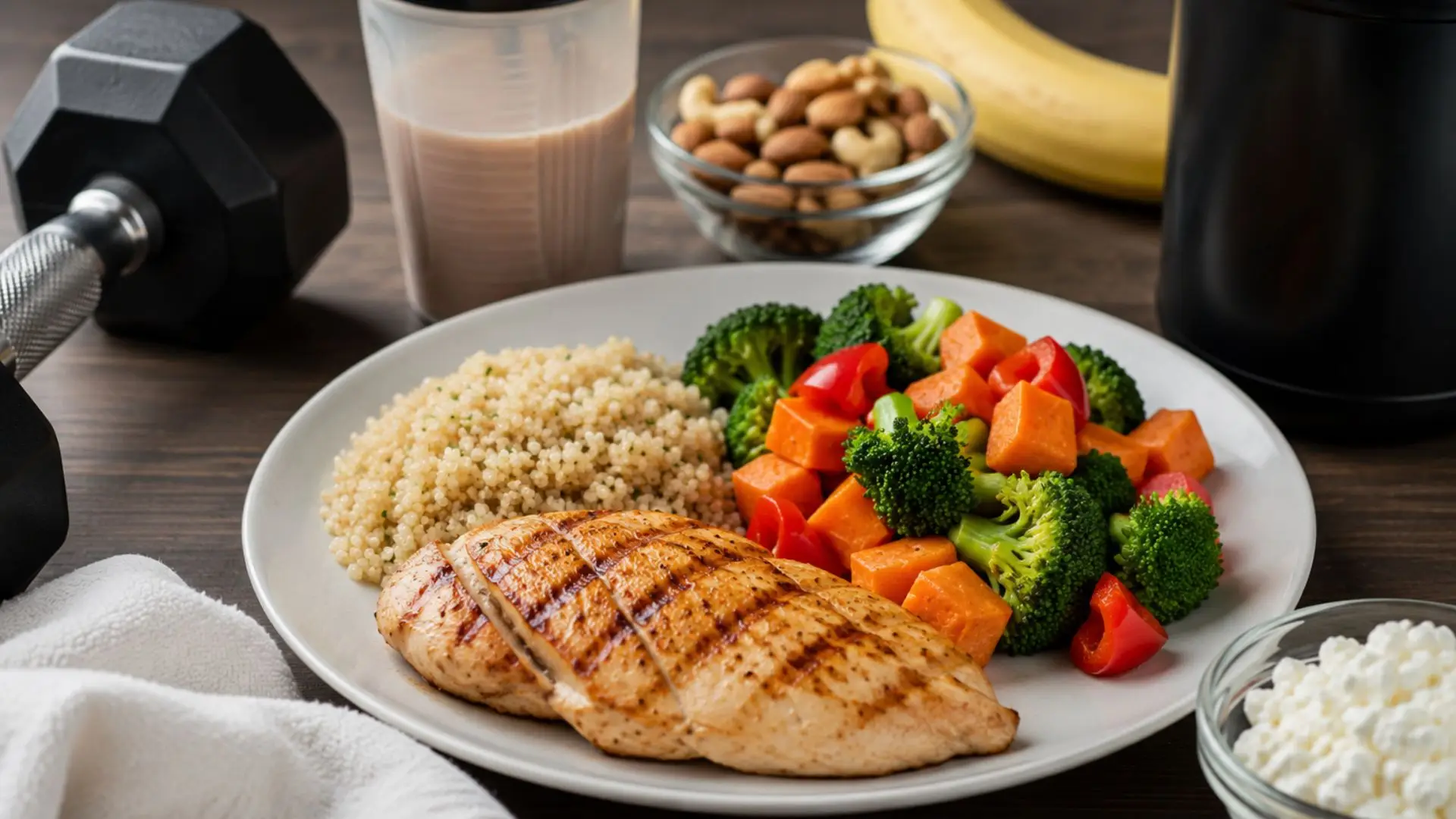
A simple combo — like chicken and rice, or a protein shake with a banana — covers both bases without overcomplicating things.
Does Timing Really Matter? The "Anabolic Window" Myth
You may have heard you need to eat within 30 minutes of finishing your workout or you’ll “lose your gains.” This is largely outdated advice.
The real window for post-workout nutrition is more flexible than most people think — generally within a couple of hours of training is plenty for most people, not an urgent sprint to the fridge.
What matters far more than perfect timing:
- Eating enough protein and carbs consistently throughout the day
- Not skipping meals for hours before or after training
- Overall daily nutrition, not just the post-workout meal
If you’re chasing the perfect 30-minute window while ignoring the rest of your day’s nutrition, you’re focusing on the wrong thing.
Does It Matter If You Did Cardio vs. Strength Training?
Somewhat — but the fundamentals stay the same either way, whether you’re working through a set of chest workout exercises or a full cardio session.
- After strength training (like an effective chest workout or a session hitting triceps with dips), prioritize protein for muscle repair, paired with carbs to refuel.
- After cardio, carbohydrate replenishment becomes slightly more important, especially after longer or higher-intensity sessions.
Either way, the same combo — protein plus carbs — covers your bases.
Curious whether strength training itself is burning meaningful calories on top of your nutrition efforts? It’s a common question, and strength training does burn calories both during and after your session, which is worth factoring into your overall nutrition approach.
Simple Post-Workout Meal Ideas
No need to overthink it. Here are a few easy, balanced options:
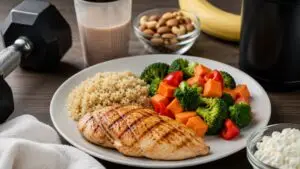
- Grilled chicken with rice and vegetables
- Greek yogurt with berries and granola
- A protein shake with a banana
- Eggs with whole grain toast
- Turkey and rice bowl with a side of fruit
Pick whatever fits your schedule and preferences — consistency beats perfection.
What About Beginners Just Starting Out?
If you’re newer to training — especially if you’re following an at-home beginner workout routine or working through your first few weeks of a fitness ab workout or general strength program — don’t stress about getting nutrition perfect right away.
Focus on two habits first:
- Eating a source of protein at most meals
- Not skipping meals around your workout window
Once those become automatic, you can fine-tune the details.

A Note on Working With a Trainer for Nutrition Guidance
If you’re working with a personal trainer, nutrition guidance should be part of the conversation — not an afterthought. One of the common mistakes people make when working with a personal trainer is focusing entirely on the workout program while ignoring how nutrition supports (or undermines) that plan.
A well-designed program accounts for both training and nutrition together — because one without the other rarely delivers the results you’re after.
The Bottom Line
Post-workout nutrition doesn’t need to be complicated. Get enough protein, pair it with some carbs, eat within a reasonable window after training, and stay consistent day to day.
That’s it. The people who overcomplicate this often stress about timing while neglecting the basics that actually drive results.
Want a Plan That Takes the Guesswork Out?
Stop piecing together advice from different sources. Get a free training and nutrition plan here and start fueling your results the right way.